Home | Begin Journey | Our Area | Sites | Resources | Congregations
Communities | Cultures | Internationals | Spaces | Venues
Events | Training | Team | Contact | Search


Ministry Resources for Hispanic Cultures
Other Neighborhoods: Upscale Mainstay Working Country Aspiring Urban
Community Types: Upscale Mainstay Working Country Aspiring Urban
Cultural Neighborhoods: Black Hispanic Asian Native Islander White
Living Spaces: MultiFamily Student Military Correctional Medical SingleFamily
Selected Ministry Resources for Hispanic Cultural Neighborhoods
Each of the six Hispanic cultural neighborhoods offers a unique ministry situation. Below are ministry resources that describe and discuss the Hispanic ministry contexts.
Hispanic Theology & Biblical Interpretation
Handbook of Latina/o theologies
Handbook of Latino/a Theologies explores the varied theological, ecclesiastical, spiritual, and cultural expressions associated with the term 'Latino/a or Hispanic theology.' There is no single definition of Hispanic/Latino theology, but rather a multiplicity of perspectives within the diverse Latino/a communities that articulate a distinctive and relevant Hispanic viewpoint. This collection of thirty-four essays surveys how Latinos/as understand and do theology within those varied contexts. It gives attention to the history, nature, sources, and development of Latinos/as theological expressions within the U.S. and their contribution to the overall theological discourse and to the individual groups that gave rise to them. Part I of the handbook presents essays on many traditional topics in Christian theology representative both of the individual authors and various beliefs found in Latino/a communities. Part II focuses on trends and contextual issues within the overall Hispanic/Latino theological conversation.
Buy at:
Amazon.com
Christians at the Border: Immigration, the Church, and the Bible
Immigration is one of the most pressing issues on the national agenda. In this accessible book, an internationally recognized immigration expert helps readers think biblically about this divisive issue, offering accessible, nuanced, and sympathetic guidance for the church. As both a Guatemalan and an American, the author is able to empathize with both sides of the struggle and argues that each side has much to learn. This updated and revised edition reflects changes from the past five years, responds to criticisms of the first edition, and expands sections that have raised questions for readers. It includes a foreword by Samuel Rodríguez and an afterword by Ronald Sider. This timely, clear, and compassionate resource will benefit all Christians who are thinking through the immigration issue.
Buy at:
Amazon.com
Manana: Christian Theology from a Hispanic Perspective
An in-depth look at Christian theology through Hispanic eyes. It weaves the doctrinal formulations of the early church on creation, the Trinity, and Christology into contemporary theological reflection on the Hispanic struggle for liberation. This volume offers a major theological statement from a respected theologian and author. Richly insightful and unique, Manana is one of the few major theological works from a Protestant representative of the Hispanic tradition. Justo L. Gonzalez offers theological reflections based upon unique insights born of his minority status as a Hispanic American.
Buy at:
Amazon.com
Santa Biblia: The Bible Through Hispanic Eyes
Gonzalez explores how a Hispanic perspective illuminates the biblical text in ways that will be valuable not only for Latino readers but also for the church at large. Introducing five "paradigms" for Latino biblical interpretation, Gonzalez discusses theory and provides concrete examples of biblical texts that gain new meaning when read from a different perspective.
Buy at:
Amazon.com
Latino/a Biblical Hermeneutics: Problematics, Objectives, Strategies (Society of Biblical Literature Semeia Studies)
In this collection of essays, contributors seek to analyze the vision of the critical task espoused by Latino/a critics. The project explores how such critics approach their vocation as critics in the light of their identity as members of the Latino/a experience and reality. A variety of critics‚¬representing a broad spectrum of the Latino/a American formation, along various axes of identity‚¬address the question in whatever way they deem appropriate: What does it mean to be a Latino/a critic?
Buy at:
Amazon.com
Hispanic Christian thought at the dawn of the 21st century
In this book Alvin Padilla, Roberto Goizueta, and Eldin Villafa±e bring together an impressive array of Hispanic scholars from across the theological disciplines to articulate just such a comprehensive construction of Hispanic theology. Their purpose is to delineate the common elements in Hispanic biblical studies, theology, and ethics and to draw these together into a statement of what Hispanic theology has to say to the larger theological community, and to the church. To do so they organize their presentation around four theological streams that run through Hispanic theology: * Reading Scripture from the Margins: The contributors will present a reading of the biblical text that incorporates into its interpretative methodology the experience of alienation and marginalization, the central feature of Hispanic sociohistorical reality. * Subversive and Liberating Memories: The contributors discover the subversive and liberating stories and voices within the Christian tradition and demonstrate how the memory of these "liberate" Hispanics and others from contemporary oppression. * Liberating Truth: The authors offer fresh perspective on theological truth, incorporating the distinctive Hispanic sources, locus, and expressions. * Liberating Praxis: Drawing on current Hispanic religious experience (for example, spirituality, church life, and ministry), the authors reflect on the way Hispanic religious experience is changing and how it will change the landscape of Western …
Buy at:
Amazon.com

Teologia: An Introduction to Hispanic Theology
Dr. Pedraja provides a most welcome introduction to Hispanic American theology. He has a gift for articulating complex theological ideas in clear and accessible prose. Here Pedraja moves beyond more limited works which have, nevertheless, proven their importance within North American theological circles. In this text, the author undertakes the systematician's task of describing the methods and themes of what has now become a mature school of thought. As a Protestant, Pedraja demonstrates a remarkable ability to articulate fairly the perspectives of the variety of voices within the Hispanic community and to identify the importance of the unique Hispanic voice for the larger project of Christian theology.
Buy at:
Amazon.com
Jesus in the Hispanic Community
While the insights of Latino /a theologians from Central and South America have gained attention among professional theologians, until now the role of U.S. Latino /a theology in the formation of North American theological identity has been largely unacknowledged. Exploring both constructive theology and popular religion, these exciting and contemporary essays from top U.S. Latino /a scholars reveal the varieties of religious experience in the United States and the importance of Latino /a understandings of Christ to both academy and community.
Buy at:
Amazon.com
Teologia en Conjunto: A Collaborative Hispanic Protestant Theology
Two aspects are fundamental to Hispanic/Latina theology: rich diversity and a collaborative spirit. In this groundbreaking book, Hispanic scholars come together to create a theology drawn from the collaboration of Latino and Latina Protestants in North America. The authors discuss a range of topics--God, Jesus Christ, the Holy Spirit, the importance of scripture, the church, humanity, the doctrine of sin, spirituality--and the challenges facing Hispanic/Latina Protestant theology.
Buy at:
Amazon.com
Church Administration in Hispanic Communities

La Administracion de las Finanzas de la Iglesia: Ministerio series AETH
Original writings in Spanish from the Association for Hispanic Theological Education, this volume provides readers with an enjoyable and organized way to help a church's financial program run smoothly and effectively. Enhances future ministries of Spanish-speaking seminary students Appeals to current Latino pastors and lay leaders who need practical help in managing the financial aspects of their ministry Quick help and reading on one of the most important aspects in Latino ministry Written in Spanish by a tried and true expert Ideal for students
Buy at:
Amazon.com
Church Development & Church Planting in Hispanic Communities
Adoracion Cristiana
Este libro examina el tema de la adoraci³n cristiana desde el punto de vista del protestantismo y la diversidad dentro de este. Es en esta diversidad que se han configurado modelos distintos en la organizaci³n eclesi¡stica y ha resultado en una adoraci³n marcadamente creativa y flexible. El autor nos guiar¡ por el desarrollo hist³rico de esta adoraci³n y expondr¡ algunos de los modelos b¡sicos.
Buy at:
Amazon.com
Navidad Hispana
Our Lady of Guadalupe and the Advent wreath? Christmas continuing into February? How can multicultural parishes draw on the wisdom in Hispanic devotions and still hold everyone together? The authors of this exciting and useful new book extend the insights they offered in Primero Dios to the Advent and Christmas seasons, showing how to create a liturgical link between the rituals of Hispanic homes and neighborhoods and the liturgies of the entire parish. Brief fictional narratives initiate all of us into a Hispanic perspective on the seasons of Advent and Christmas. Pastoral notes recommend helpful adaptations of homeland customs. Bilingual rites are provided, which can be modified for specific parish or community needs. This treasure trove of hard-to-find information is a unique and valuable resource for parish staffs, liturgical ministers, catechists, small groups, and families.
Buy at:
Amazon.com
Starting Hispanic Ministry: Gleanings in the Southwestern USA Field of Domestic Ministry
A guide on how to begin ministry to Latinos in the USA. Illustrations are taken from actual congregations in the southwest. Cultural issues, leadership, evangelism, congregational formation, social service ministry, congregational leadership, issues of church practice, personal anecdotes, and a breadth of perspective in the Protestant tradition.
Buy at:
Amazon.com
Reaching Hispanics in North America
A book written by Hispanics in the U.S. about Hispanics in the U.S. Reaching Hispanics in North America gives a broad understanding of the culture of, and diversity among, Hispanics in North America, and how best to partner with, evangelize, plant churches, and grow Hispanic congregations.
Buy at:
Amazon.com

Latino Churches: Faith, Family, and Ethnicity in the Second Generation
Crane's work shows how a significant number of Latino youth born in the rural Midwest have stayed involved in church out of ethnic and family solidarity. Although these youths do not show the same zeal and enthusiasm for certain traditions held dear by their parents, they have kept the church as a vital social space for expressing their own spirituality and ethnic identity. Latino churches, in turn, are effective in shaping the lives of youth because they function both as supporters and extensions of the family. The family-congregation nexus combines to enable a more selective form of acculturation that maintains a high-level of family cohesion and linguistic-cultural continuity. Crane's study shows that religion continues to increase the diversity of society rather than facilitate the "incorporation" of ethnic groups into a cultural "mainstream."
Buy at:
Amazon.com
Empowering Hispanic Leaders
The estimated Hispanic population of the United States was 45.5 million in 2007, making people of Hispanic origin the nation's largest ethnic or race minority. Hispanics constitute 15 percent of the nation's total population. The Latino population in the United States will triple in size, and according to the Census projections, Hispanics will make up 29 percent of the United States population by 2050. This book offers suggestions for training Hispanic leaders who will be involved in ministry in various regions of the United States. The findings of this research project produced information, understanding, and direction that can contribute to the imperative efforts to train emerging leaders for Hispanic groups everywhere. The principles revealed in this study of Hispanic leadership training will prove effective in empowering leaders of other groups in the United States and other countries.
Buy at:
Amazon.com
Parish ministry in a Hispanic community
Hispanics constitute "more than one third of Catholics in the United States," and account for "seventy one per cent of Catholic growth." By the year 2050, "eighty six per cent of American Catholics will be Hispanic," with Mexicans constituting the largest and fastest growing segment of the Hispanic population in the United States. In response, this comprehensive and important book, built around the model of one urban Hispanic parish, St. Pius V in the Pilsen neighborhood of Chicago, details the ways that Hispanics, Mexicans, in particular, can be integrated into the Church and still retain their unique identity. The book embraces Mexicans' deep, vibrant religiosity, rooted in their love of native language, music, rich adornment, ritual, and tradition, and responds to their problems, machismo, loneliness, isolation, discrimination, marginalization, by highlighting a network of parish resources made available to them--from soup kitchens, shelters and secondhand clothing stores, to parenting, marriage and family counseling programs, to organizing Comunidades de Base, Christian Base Communities, fiestas, street fairs, communal celebrations that meld liturgy and culture. A fact-filled, well-considered look at the future face-multicultural and non-white--of the American Catholic Church, Parish Ministry in a Hispanic Community is a must-read for students and teachers of theology, and especially, clergy, laity, parishes and parishioners. In short, the Church itself.
Buy at:
Amazon.com
Inside Hispanic Evangelicals : Cultural Roots of Hispanic Evangelical Religion
"Inside Hispanic Evangelicals" is a review of the cultural history and spiritual trajectory of US Hispanics who identify with Evangelicalism. This book was written for those who desire a better understanding of the "heart works" of Hispanics and for those who aspire to enter into meaningful dialogue with Hispanic Evangelicals.
Buy at:
Amazon.com
Alabadle!: Hispanic Christian Worship
By looking at the wide variety of Hispanic Christian worship that exists within the Hispanic community, Alabadle! highlights the cultural, generational, and denominational elements that comprise the spectrum of Hispanic worship. Justo L. Gonzalez and seven other contributors provide an insightful look into the variety of worship styles that exist among numerous church traditions including Assemblies of God, United Methodist, Catholic, American Baptist, Presbyterian, and Disciples of Christ. And yet, in the midst of this variety, is a common thread of excitement - about worship and about the gospel! Anyone interested in exploring worship, music, and liturgy styles from a particular Hispanic perspective will find Alabadle! a valuable learning tool.
Buy at:
Amazon.com
Attracting Visitors to Hispanic Churches
This book was formerly written as a doctoral thesis for Talbot School of Theology/Biola university. This study was written for the average Hispanic pastor or any pastor which its church is going through a cultural/language community change. The chapters within this book help these pastors research, analyze and make assessments of their communities which are changing rapidly with cultures or subcultures. The language matters, but the methods to be used are vital.
Buy at:
Amazon.com
Partners in the Mighty Works of God: A Manual for Non-Hispanic Churches in Ministry with Hispanics
Partners encourages churches in communities with growing Hispanic populations to consider ways to minister with the people in their neighborhood; strengthen/support existing ministries; provide information about resources available to help them in these ministries. Includes stories, an appendix with each chapter, a bibliography, and activities and questions for discussion/reflection that expand the concepts outlined in each chapter.
Buy at:
Amazon.com
Walk with the People: Latino Ministry in the United States
The growth and religious commitment of the Latino community in the U.S. presents a unique set of challenges for pastors in that community. Walk with the People: Latino Ministry in the United States identifies and analyzes the contemporary challenges facing Latino churches in the U.S. and some of the issues they are likely to face in the future. Latino pastors, and others working in the community, need to understand and grapple with these challenges. As the Latino community continues to grow and diversify, effective church leaders in Latino congregations will need to retool their ministries to address these changes.
Buy at:
Amazon.com
Ripe Fields: : The Promise and Challenge of Latino Ministry
Timed to be launched at 2009 General Convention, Juan Oliver definitive look at the history and potential future of Latino ministry in the Episcopal Church comes at an opportune time. With Latino ministries growing around the country in all traditions, and with increasing resource and programmatic offerings being allocated to serve those communities, this highly descriptive handbook profiles the culture, faith, and importance of this emerging minority.
Buy at:
Amazon.com
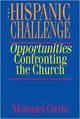
The Hispanic Challenge: Opportunities Confronting the Church
"The Sleeping Giant" is the fastest-growing minority group in the U.S.--the Hispanic community. Hispanics, especially Puerto Ricans, Cubans and Mexicans, are changing society and the church. As a second-generation Puerto Rican, born and reared in El Barrio of New York City, Manuel Ortiz knows first-hand what it is like to be a Hispanic in the U.S. As a sociologist, he recognizes the exciting potential for the future of the church--if leadership development is undertaken. Oritz first explores the unique needs and concerns of Hispanics in the U.S. Then he turns to key missiological issues, including Protestant-Catholic relationships, justice, racial reconcilliation and ecclesiastical structures. Ortiz has interviewed numerous Hispanic leaders working in a variety of contexts and describes their models for ministry. Finally, the book focuses on leadership training and education, with a particular emphasis on developing second-generation leadership. The sleeping giant must not be ignored. This is a book that will awaken awareness of the possibilities of the Hispanic church.
Buy at:
Amazon.com
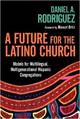
A Future for the Latino Church: Models for Multilingual, Multigenerational Hispanic Congregations
Many assume that Hispanic ministry in North America still necessarily focuses on Spanish-language congregations. But over 60 percent of all American Latinos were born in the United States and are now English dominant. Daniel Rodriguez argues that effective Latino ministry and church planting are now centered in second-generation, English-dominant leadership and congregations. Based on his observation of dozens of cutting-edge Latino churches across the country, Rodriguez reports on how innovative congregations are ministering creatively to the next generations of Latinos. In-depth case studies reveal how gifted leaders are reaching beyond their own demographics to have lasting impact on their wider communities. The future of the Latino church is multilingual, multigenerational and multiethnic. Those who "live in the hyphen" between Latino and American can become all things to all Latinos, sharing the gospel in ways that language is no barrier.
Buy at:
Amazon.com
Evangelism, Discipleship & Missions in Hispanic Communities
La Planificacion Eficaz de la Educacion Cristiana: Ministerio series AETH: Christian Education
Este libro constituye una herramienta indispensable para cualquier pastor y laico que se dedica a la tarea docente en la iglesia. El proposito de este libro es crear conciencia sobre la importancia de que pastores y pastoras, lideres, y educadores de la iglesia asuman un mayor compromiso con la planificacion de la educacion cristiana. El ministerio educativo es fundamental para la preservacion y desarrollo de la iglesia, para su obediencia al mensaje de Jesus y para su testimonio en el mundo. Por eso, su planificacion debe asumirse con toda responsabilidad y realizarse de la mejor manera posible. This book calls pastors, leaders and educators of the church to assume a greater commitment to Christian education planning. The education ministry is essential to the church's preservation and development, and it helps us to reach out to the world with the message of Jesus Christ.
Buy at:
Amazon.com
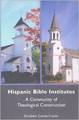
Hispanic Bible Institutes
Elizabeth Conde-Frazier explains the Hispanic church in the United States as a church in diaspora. She studies two New England Bible Institutes and describes the changes and developments of these communities, including their sociological and theological influences.
Buy at:
Amazon.com
Good news from the Barrio: Prophetic Witness for the Church
In a world divided by race, ethnicity, gender, violence, and hate, Harold Recinos's Good News from the Barrio explores the ways in which the good news of the gospel is at work in Latino barrios. He challenges Christians to listen to the gospel in these contexts and offer a prophetic witness to the nation and the church.
Buy at:
Amazon.com
Gospel in the Rosary: Bible Study On the Mysteries of Christ
This book, The Gospel in the Rosary, written by Daniel R. S¡nchez, is actually a series of Bible Studies that help non-Catholics understand the Rosary and its place in Roman Catholic devotions as well as help Catholics gain a greater understanding of the biblical teachings upon which the Mysteries of the Rosary are based. In addition to the Joyful, Sorrowful, and Glorious Mysteries, this book includes the Luminous Mysteries. It is the sincere hope of this author that those who study this book will deepen their relationship with Jesus Christ as their personal Savior and Lord
Buy at:
Amazon.com
Hispanic Realities Impacting America: Implications for Evangelism & Missions
Dr. Sanchez outlines and describes in relation to Hispanic populations ten crucial realities that are impacting America. He then outlines means of reaping the harvest among Hispanics that God is empowering. Chapters by noted experts on Hispanic church ministry, Jesse Miranda, Bobby Sena, and Diana Barrera enhance the study. An indispensable resource for all who strive to evangelize Hispanics and provide viable churches within this population group.
Buy at:
Amazon.com
Sharing the Good News with Our Roman Catholic Friends
The book, Sharing the Good News with Our Roman Catholic Friends, by Dr. Daniel R. S¡nchez and Rudolph D. Gonz¡lez, communicates a clear and accurate understanding of the teachings and practices of the Roman Catholic together with a sensitive and helpful approach to sharing the gospel with persons who are influenced by the Catholic Church and tradition. This course equips participants for deeper Christian living and more effective Christian sharing
Buy at:
Amazon.com
Pastoral Ministry in Hispanic Communities
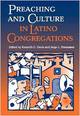
Preaching and Culture in Latino Congregations
Good preaching and good ministry can happen only when the minister respects the way that the word has become flesh in a particular community: the way stories are told, children are raised, history is remembered, art is made. Wonderfully, this immersion is no chore. It is a delight. With an emphasis on preaching but a concern for all aspects of ministry, the eight authors of the articles in this book explore the blessing that is the Hispanic presence in the United States. Contributors include Rosa Maria Icaza, Maria Luisa Iglesias, SC, Jaime Lara, Juan J. Sosa, Raul Gomez, and Victor Alvarez. Their words will open the eyes of non-Hispanics and have wisdom for Hispanics themselves as all of us approach a privileged moment for the Catholic Church in the United States.
Buy at:
Amazon.com
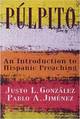
Pulpito: An Introduction to Hispanic Preaching
In this, the only book available that addresses the distinctive issues and character of preaching in the Hispanic congregation, the authors discuss important historical, theoretical, and methodological issues in Hispanic homiletics. Includes ten sermons.
Buy at:
Amazon.com
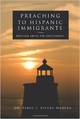
Preaching To Hispanic Immigrants: Practical Advice For Effectiveness
This book is in response to the concern of many non-Hispanic religious leaders and churches on how to reach out to the Hispanic community through an effective preaching. The gospel is a vehicle of healing and unity with the power to promote the healthy integration of Hispanics to their new environment. Preaching can bring communities together. This book will give non-Hispanic leaders general knowledge and skills to craft and deliver their sermons with sensibility and connection. The findings of this study and the recommendations offered in this book to non-Hispanics have been validated by relevant literature about the subject of preaching. This book will help non-Hispanic preachers to connect with Latinos with a relevant, interesting and passionate message. Non Hispanic religious leaders will meet the challenge of proclaiming the truth of the gospel in such a way that will cause Hispanics to listen and to respond to the gospel of our Lord Jesus Christ.
Buy at:
Amazon.com
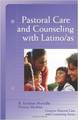
Pastoral Care And Counseling With Latino/as (Creative Pastoral Care & Counseling)
The Latino population is a pastorally challenging polyculture. This diversity requires spiritual caregivers to approach every Hispanic individual with humbleness. "Cada persona es un mundo," "every person is a world," says Montilla. To equip professionals in ministry for their ministry with and for Latino/as, Montilla centers his presentation on families and rituals at the heart and soul of the Hispanic community as the key to caregiving. In that context he unfolds a variegated picture of the particular cultural guideposts for Latinas and Latinos in the U.S. today, especially their symbols and rituals, attitudes toward health and healing, abiding faith, and contemporary quest for creative agency and dignity. He closes by exploring pastoral strategies with issues of discrimination and racism, and contemporary issues in providing pastoral counseling with Latinas and Latinos.
Buy at:
Amazon.com
About Hispanic-American Religion
Introduction to the U. S. Latina and Latino religious experience
Latinos/Latinas are the largest minority in the United States, but the field of U.S. Latino/Latina studies is still in its infancy. This work represents the first single volume ever published on the U.S. Latino/Latina religious experience, an area that is even less explored. A carefully selected group of experts examines the major sub-groups of Latinos/Latinas including Mexican Americans, Puerto Ricans, and Cuban Americans, along with some of the lesser studied groups such as Dominicans and Central Americans. In addition, the volume includes important thematic chapters on the roles of art, film, health care, literature, music, politics, and womens influence in the U.S. Latino/Latina religious experience.
Buy at:
Amazon.com
Latinos and the New Immigrant Church
Latin Americans make up the largest new immigrant population in the United States, and Latino Catholics are the fastest-growing sector of the Catholic Church in America. In this book, historian David A. Badillo offers a history of Latino Catholicism in the United States by looking at its growth in San Antonio, Chicago, New York, and Miami. Focusing on twentieth-century Latino urbanism, Badillo contrasts broad historic commonalities of Catholic religious tradition with variations of Latino ethnicity in various locales. He emphasizes the contours of day-to-day life as well as various aspects of institutional and lived Catholicism. The story of Catholicism goes beyond clergy and laity; it entails the entire urban experience of neighborhoods, downtown power seekers, archdiocesan movers and shakers, and a range of organizations and associations linked to parishes. Although parishes remain the key site for Latino efforts to build individual and cultural identities, Badillo argues that one must consider simultaneously the triad of parish, city, and ethnicity to fully comprehend the influence of various Latino populations on both Catholicism and the urban environment in the United States. By contrasting the development of three distinctive Latino communities‚¬the Mexican Americans, Puerto Ricans, and Cuban Americans‚¬Badillo challenges the popular concept of an overarching "Latino experience" and offers instead an integrative approach to understanding the scope, depth, and complexity of the Latino contribution to the character of America's urban landscapes.
Buy at:
Amazon.com
Hispanic American Religious Cultures
Spanning two volumes, Hispanic American Religious Cultures encompasses the full diversity of faiths and spiritual beliefs practiced among Hispanic Americans. It is the first comprehensive work to provide historic contexts for the many religious identities expressed among Hispanic Americans.The entries of this encyclopedia cover a range of spiritual affiliations, including Christian religious expressions, world faiths, and indigenous practices. Coverage includes historical development, current practices, and key individuals, while additional essays look at issues across various traditions. By examining the distinctive Hispanic interpretations of religious traditions, Hispanic American Religious Cultures explores the history of Latino and Latina Americans and the impact of living in the United States on their culture.
Buy at:
Amazon.com
Mexican American Religions: Spirituality, Activism, and Culture
This collection presents a rich, multidisciplinary inquiry into the role of religion in the Mexican American community. Breaking new ground by analyzing the influence of religion on Mexican American literature, art, activism, and popular culture, it makes the case for the establishment of Mexican American religious studies as a distinct, recognized field of scholarly inquiry. Scholars of religion, Latin American, and Chicano/a studies as well as of sociology, anthropology, and literary and performance studies, address several broad themes. Taking on questions of history and interpretation, they examine the origins of Mexican American religious studies and Mario Barreras theory of internal colonialism. In discussions of the utopian community founded by the preacher and activist Reies L³pez Tijerina, C©sar Ch¡vezs faith-based activism, and the Los Angeles-based Cat³licos Por La Raza movement of the late 1960s, other contributors focus on mystics and prophets. Still others illuminate popular Catholicism by looking at Our Lady of Guadalupe, home altars, and Los Pastores dramas (nativity plays) as vehicles for personal, social, and political empowerment. Turning to literature, contributors consider Gloria Anzaldºas view of the borderlands as a mystic vision and the ways that Chicana writers invoke religious symbols and rhetoric to articulate a moral vision highlighting social injustice. They investigate the role of healing, looking at it in relation to both the Latino Pentecostal movement and the practice of the curanderismo tradition in East Los Angeles. Delving into to popular culture, they reflect on Luis Valdezs video drama La Pastorela: The Shepherds Play, the spirituality of Chicana art, and the religious overtones of the reverence for the slain Tejana music star Selena. This volume signals the vibrancy and diversity of the practices, arts, traditions, and spiritualities that reflect and inform Mexican American religion.
Buy at:
Amazon.com
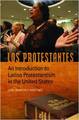
Los Protestantes: An Introduction to Latino Protestantism in the United States
Los Protestantes: An Introduction to Latino Protestantism in the United States is an important book, the first to provide a broad introduction to this rapidly growing population. At its core is an exploration of the group's demographics, denominational tendencies, and potential for continued growth. Current information is supported by a survey of the history of Latino Protestants in the United States, which dates back to the efforts of missionaries in the mid-19th century.Los Protestantes brings together data from formerly disparate studies of various aspects of the community to create an insightful overview. The work presents brief descriptions of principal denominations and organizations among Latino Protestants. It notes marked differences that separate Latino Protestants from other U.S. Protestants, and it examines an evolving Protestant/Latino ethno-religious identity. Readers will come away from this study more clearly understanding the current state of Latino Protestantism in the United States, as well as where Latino Protestants fit in the overall picture of U.S. religion.
Buy at:
Amazon.com
Hispanic Ministry in the 21st Century
The Hispanic presence in the Church in the United States is profoundly reshaping the direction and character of Catholicism in this country. As we reach the end of the first decade of the twenty-first century, nearly half the Catholic population is Hispanic and it is estimated that by 2050 Latinos/as will constitute the vast majority of U.S. Catholics. Hispanic Catholics as a group bring abundant gifts to the Church in the United States yet together face many challenges.As the century unfolds, the achievements and struggles of Hispanic Catholics will be undoubtedly perceived as those of the whole Church in the U.S. Hosffman Ospino brings an edited collection of essays written by leading voices in the field of ministry and theology that explore the present and future of Catholic Hispanic Ministry. The essays were crafted as study documents for a national symposium on this topic and were edited for further reflection in ministerial and academic contexts. This Book offers an important contribution to understand the future character of Catholicism in the U.S.
Buy at:
Amazon.com

On the Move: A History of the Hispanic Church in the United States
From the roots in Indigenous culture and the Spanish conquest, up to the present, Moises Sandoval tells the story of a people struggling to assert their dignity and to claim their own cultural identity in an essentially Anglo church. With Hispanics poised to constitute the majority of Catholics in the U.S., Sandoval paints a hopeful portrait of a new church emerging from the margins, enriched by the diversity of cultures, standing with the poor, and embracing the full experience of its people. It is a story that deserves wide attention.
Buy at:
Amazon.com